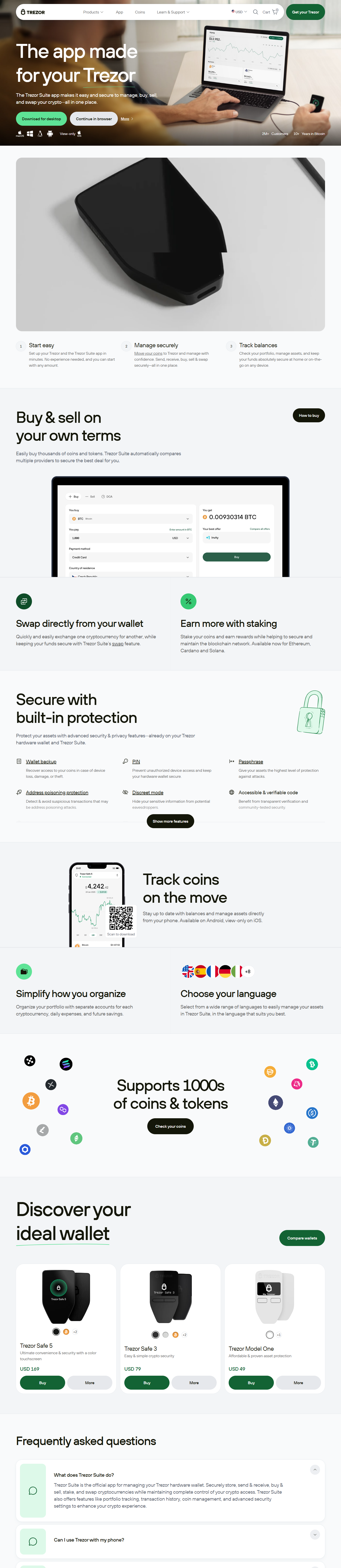
Trézor Suite — Official Trezor® Setup & Quick Guide
Securing your cryptocurrency starts with a correct hardware wallet setup. Trézor Suite — Official Trezor® Setup & Quick Guide provides a complete roadmap to initialize your wallet safely, manage your crypto assets efficiently, and maintain full privacy using trusted desktop and web platforms. This guide emphasizes security, clarity, and long-term asset protection.
Why a Proper Setup Is Crucial
Many crypto losses result from incorrect wallet initialization, not hacking. Mistakes such as using unverified software or mishandling recovery phrases can permanently expose your funds. A structured setup ensures complete ownership, privacy, and security from the beginning.
Understanding Hardware Wallet Security
Hardware wallets store private keys offline in a physical device. Desktop or web interfaces serve only as management tools to view balances and prepare transactions. Every operation requires confirmation on the device itself, protecting keys from malware or online threats.
Desktop vs Web Setup Options
Desktop Setup
Recommended for first-time initialization. Provides a secure local environment to generate recovery phrases and verify the wallet. Compatible with Windows, macOS, and Linux.
Web Setup
Offers convenience and quick access. Must always verify the official website URL to prevent phishing. Security remains strong when used properly.
Step-by-Step Wallet Initialization
Connect the hardware wallet to your computer
Launch the official interface
Create a new wallet on the device
Generate a recovery phrase offline
Verify the recovery phrase on the hardware screen
This ensures safe, private, and proper wallet creation.
Recovery Phrase: Your Most Important Key
The recovery phrase restores access if the device is lost or damaged. Guidelines:
Write it down offline on paper
Store it securely
Never photograph or save digitally
Never share
Exposure or loss can result in permanent asset loss.
Dashboard and Interface Overview
After setup, the dashboard shows balances, transaction history, and account information. Its clean design minimizes errors and guides users through secure actions.
Sending and Receiving Cryptocurrency
Outgoing transactions require hardware wallet approval. Malware or infected computers cannot transfer funds without physical confirmation. Receiving funds is secure and private.
Managing Multiple Cryptocurrencies
Supports multiple digital assets. Users can manage diverse portfolios from one interface, eliminating multiple wallets while maintaining offline security.
Privacy and Self-Custody
No centralized accounts are required. Users interact directly with blockchain networks while maintaining full privacy and control. No third-party restrictions exist.
Optional Integrated Tools
Some platforms include optional features like crypto exchange or acquisition. All actions require device confirmation, ensuring security is never compromised.
Common Setup Mistakes to Avoid
Entering recovery phrases online
Using unofficial software
Skipping verification steps
Setting up wallets on public computers
Avoiding these mistakes prevents most security incidents.
Who Should Use This Guide
New hardware wallet users
Long-term crypto holders
Security-focused investors
Anyone seeking full self-custody
Instructions are practical and beginner-friendly.
Best Practices After Setup
Store recovery phrases offline and secure
Prefer desktop usage for large balances
Check for official updates regularly
Never approve unknown transactions
Consistency ensures long-term safety.
Conclusion
Trézor Suite — Official Trezor® Setup & Quick Guide offers a structured, secure approach to hardware wallet setup. Following this guide protects digital assets, ensures full ownership, and maintains privacy and control. Proper setup is the foundation of safe cryptocurrency management and long-term security.